Reconstituting HIV Replication in a Test Tube

Graphic: Reconstituting HIV Replication in a Test Tube
Summary of the stepwise reconstitution of HIV-1 capsid-dependent replication and integration in a cell-free system. Credit: Janet Iwasa

Reverse transcription and integration are key events in retrovirus replication and are also targets of successful anti-HIV therapies. Reverse transcription creates a double-stranded DNA copy of the viral RNA genome, and integration archives that copy within the genome of the infected cell. However, studies of the mechanisms underlying these steps of the viral life cycle remain challenging because these processes are performed by viral core particles located deep within the infected cell cytoplasm and nucleus. To address this limitation, University of Utah Health investigator Wesley Sundquist, PhD, and colleagues reconstituted efficient HIV reverse transcription and integration in a cell-free system. They showed that the system responds appropriately to antiviral compounds. They also discovered that the viral capsid (the protein shell of a virus) plays an active role in supporting efficient reverse transcription. Thus, the entire core particle, including the outer capsid shell, is the true viral “replication complex”. This cell-free system is expected to enable new systematic analyses of viral replication and integration and thus help shed light on the first half of the viral life cycle.

References:

Issues Icon

Reconstitution and visualization of HIV-1 capsid-dependent replication and integration in vitro. Christensen DE, Ganser-Pornillos BK, Johnson JS, Pornillos O, Sundquist WI. Science. 2020 Oct;370(6513):eabc8420.

Press Releases and Media:

U of U Health Key Faculty Collaborators

Jarrod Johnson, PhD
Barbie Ganser-Pornillos, PhD
Owen Pornillos, PhD

Megakaryocytes and Platelets in Immune and Inflammatory Responses and in COVID-19

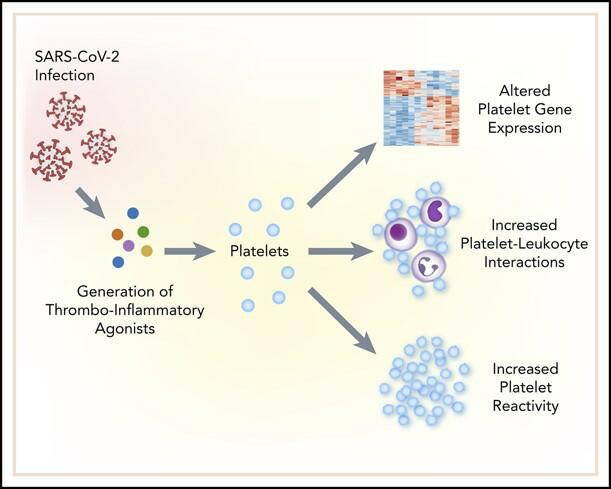
Viral Infections Alter Megakaryocyte and Platelet Gene Expression and Function. SARS-CoV-2 infection generations thromboinflammatory agonists which alter platelet gene expression and function to promote increased platelet-leukocyte aggregates and platelet reactivity.
SARS-CoV-2 infection generations thromboinflammatory agonists which alter platelet gene expression and function to promote increased platelet-leukocyte aggregates and platelet reactivity (Blood 2020).

Platelets—small cells which circulate in abundance in the bloodstream—are traditionally known for their ability to form clots and stop bleeding. Recent studies, however, have shown that platelets and their parent cells, megakaryocytes, also play a role in inflammation and infection. University of Utah Health investigators Robert Campbell, PhD, and Matthew Rondina, MD, and colleagues discovered that platelets and megakaryocytes respond robustly to infection, including COVID-19. These infection-driven changes in platelets activate clotting mechanisms and thus may contribute to the blood clots that complicate COVID-19 infection. 

Interestingly, Campell and Rondina and their collaborators also found that platelets and megakaryocytes demonstrate robust anti-viral defense properties that inhibit the spread of infection. Therefore, megakaryocytes from patients with genetic mutations in these anti-viral defense proteins are more susceptible to infection. These findings helped identify new pathways that regulate host responses to viral infection, and platelets are now being targeted therapeutically in patients with COVID-19.

References:

Issues Icon

Human megakaryocytes possess intrinsic antiviral immunity through regulated induction of IFITM3. Campbell RA, Schwertz H, Hottz ED, Rowley JW, Manne BK, Washington AV, Hunter-Mellado R, Tolley ND, Christensen M, Eustes AS, Montenont E, Bhatlekar S, Ventrone CH, Kirkpatrick BD, Pierce KK, Whitehead SS, Diehl SA, Bray PF, Zimmerman GA, Kosaka Y, Bozza PT, Bozza FA, Weyrich AS, Rondina MT. Blood. 2019 May 9;133(19):2013-2026.

Issues Icon

Platelet gene expression and function in COVID-19 patients. Manne BK, Denorme F, Middleton EA, Portier I, Rowley JW, Stubben CJ, Petrey AC, Tolley ND, Guo L, Cody MJ, Weyrich AS, Yost CC, Rondina MT, Campbell RA. Blood. 2020 Sep 10;136(11):1317-1329.

Issues Icon

COVID-19 patients exhibit reduced procoagulant platelet responses. Denorme F, Manne BK, Portier I, Petrey AC, Middleton EA, Kile BT, Rondina MT, Campbell RA. J Thromb Haemost. 2020 Nov;18(11):3067-3073.

Press Releases and Media:

U of U Health Key Faculty Collaborators

Hansjorg Schwertz, MD
Jesse W. Rowley, PhD
Paul F. Bray, MD
Guy A. Zimmerman, MD
Andrew S. Weyrich, PhD
Elizabeth A. Middleton, MD
Aaron C. Petrey, PhD
Christian Con Yost, MD

Visualizing the SARS-CoV-2 Life Cycle

Graphic: Visualizing the SARS-CoV-2 Life Cycle
3D model of SARS-CoV-2.

SARS-CoV-2 is defining disease of the current era. Many biological researchers have redirected their focus to understanding and defeating the virus, rapidly leading to new insights into how the virus gains access to and hijacks human cells. University of Utah Health investigator Janet Iwasa, PhD, and colleagues have used this information to create detailed molecular animations of different stages of the SARS-CoV-2 life cycle. The animations have been released to the research community and the public, embedded within a web-based user interface that allows users to interact with the animation in order to view annotations (such as protein names and citations), ask questions, and make comments. The annotation functionality, developed in collaboration with Miriah Meyer, PhD, now at Linköping University, is critical for describing the data used to create the visualization, and for discussing aspects of the life cycle that are not yet well understood.

References:

Press Releases and Media:

A Potent, Long-lasting HIV Capsid Inhibitor

Graphic: A Potent, Long-lasting HIV Capsid Inhibitor
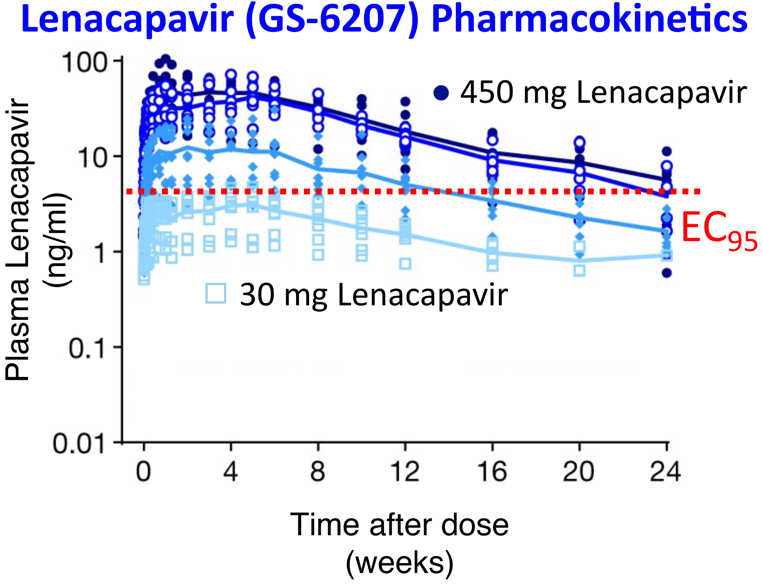
The graph shows drug levels in people treated with single doses of Lenacapavir at different levels. The dotted red line shows the drug level required to inhibit HIV replication by 95%. The highest levels of Lenacapavir remain inhibitory for more than 24 weeks and are well tolerated.

Antiretroviral drugs have saved the lives of millions living with HIV/AIDS. However, problems with drug resistance limit available treatments, and inconsistent adherence to daily dosing schedules can lead to poor outcomes and new infections. Long-acting drugs that can overcome drug resistance by targeting new classes of viral proteins are therefore needed. University of Utah Health researcher Wesley Sundquist, PhD, and colleagues performed mechanistic studies and completed a phase 1 clinical trial of Lenacapavir, a molecule that inhibits the HIV capsid (outer shell). Lenacapavir is long-acting due to its high potency, slow release from the injection site, and slow clearance from the body. Single doses of Lenacapavir injected under the skin maintained antiviral concentrations for more than 6 months. The study validates therapies that target the HIV capsid, and demonstrates the potential of Lenacapavir as a long-acting agent to treat and prevent HIV infections. Lenacapavir was developed by Gilead Sciences, building on studies of HIV capsid structure and function from the Sundquist and Chris Hill, DPhil, laboratories (and others). Following a successful phase 3 trial, Lenacapavir has now been approved for use in Europe, and use in the US is pending FDA approval.

References:

Issues Icon

Clinical targeting of HIV capsid protein with a long-acting small molecule. Link JO, (Sundquist WI), et al. Nature. (2020) Aug;584(7822):614-618.

Press Releases and Media:

Supporting Health by Screening for Social Needs

Photo for "Supporting Health by Screening for Social Needs" entry, featuring a patient in an exam room being asked questions by a healthcare provider.

When patients struggle to get enough food, lack stable housing, or have limited access to transportation, their health can suffer. One analysis estimated that as much as 50 percent of the variation in health outcomes between counties in the U.S. can be attributed to social determinants of health like these. Such factors can limit the effectiveness of clinical care—but health care workers often don’t know what their patients are dealing with outside the clinic.

Addressing patients’ social needs is not always a priority in busy hospitals and clinics. But Andrea Wallace, PhD, RN, associate dean for research at the College of Nursing, has developed a way to make this a routine aspect of care. With systematic screening, patients’ unmet needs can be identified so clinicians can connect them with services that can help.

Wallace and her U or U Health colleagues have demonstrated that this screening can be done in emergency departments, which see disproportionate numbers of patients who are uninsured and have low incomes. The researchers are focused on finding the best ways to assess for social needs, considering factors such as language barriers, privacy concerns, and potential discomfort for patients and staff. In their most recent study, conducted at a children’s hospital in Salt Lake City, systematic screening allowed the team to identify 1,680 families with unmet social needs in a four-month period.

Wallace and colleagues have also shown how emergency departments can partner with a community service referral network to connect patients and families with services once needs have been identified. By helping secure access to healthy food, finding transportation to medical appointments, or assisting with rent and utilities, they can help patients get on a path to better health.

References:

Issues Icon

Social Needs Screening During Pediatric Emergency Department Visits: Disparities in Unmet Social Needs. Tedford NJ, Keating EM, Ou Z, Holsti M, Wallace AS, Robison JA. Acad Pediatr. 2022 Nov-Dec;22(8):1318-1327. doi: 10.1016/j.acap.2022.05.002.

Integrating social determinants of health screening and referral during routine emergency department care: evaluation of reach and implementation challenges. Wallace AS, Luther BL, Sisler SM, Wong B, Guo JW. Implement Sci Commun. 2021 Oct 7;2(1):114. doi: 10.1186/s43058-021-00212-y.

Implementing a Social Determinants Screening and Referral Infrastructure During Routine Emergency Department Visits, Utah, 2017-2018. Wallace AS, Luther B, Guo JW, Wang CY, Sisler S, Wong B. Prev Chronic Dis. 2020 Jun 18;17:E45. doi: 10.5888/pcd17.190339.

Neuronal Connections in the Retina

Graphic- Neuronal Connections in the Retina
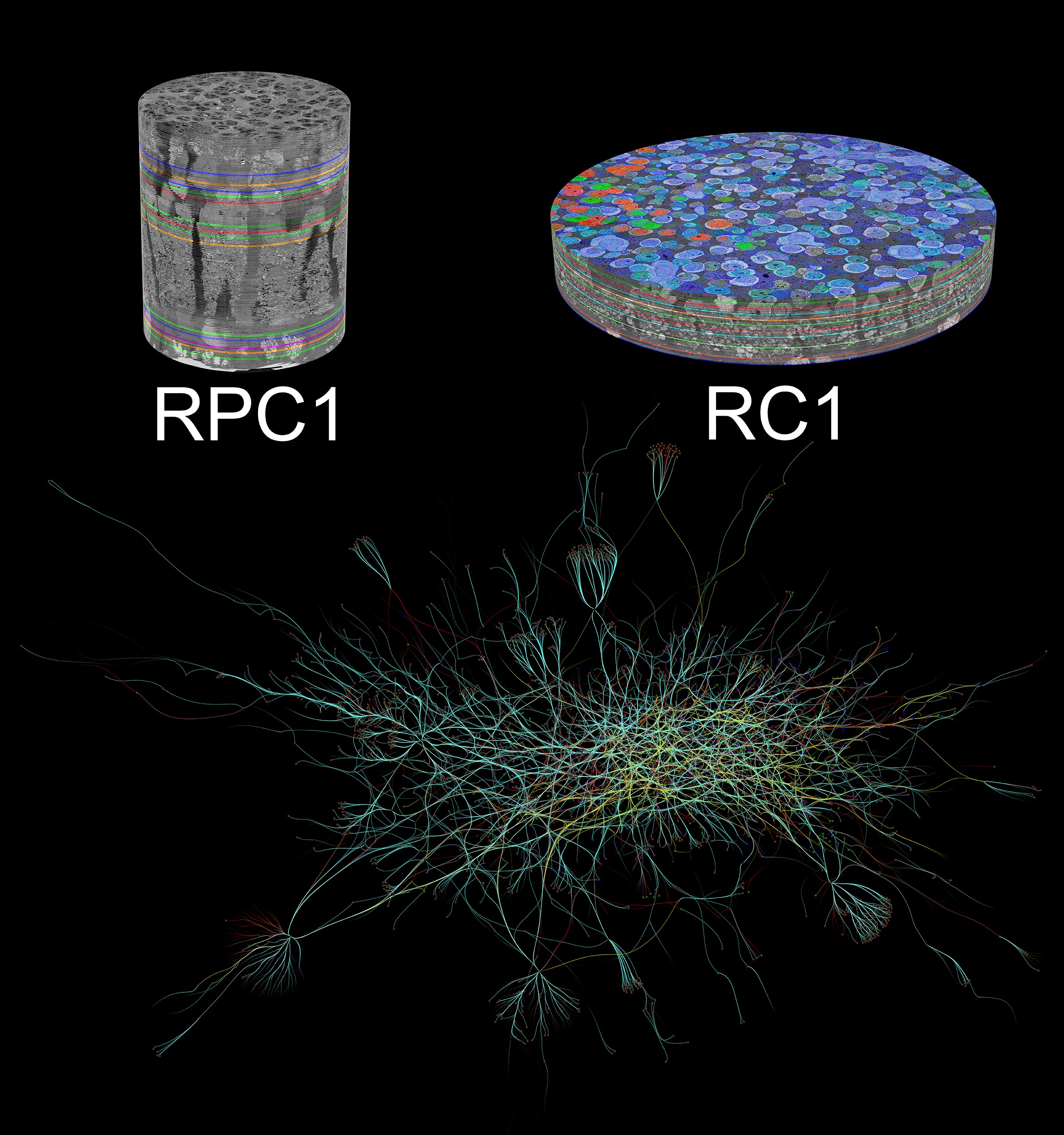
A connectome from a normal rabbit retina (retinal connectome-1 or RC1 (top right) and a pathoconnectome from a diseased rabbit retina (Retinal Pathoconnectome-1 or RPC1 (top left). The image at bottom represents a “wiring diagram” showing the connections of 5113 neurons in a normal rabbit retina, connected by 8631 chemical and electrical synapses.

Understanding how neural systems are connected is a neuroscience grand challenge. The neural circuits in retina detect and process light information, then relay that information to the brain for further processing; the retina, therefore, provides a unique opportunity to understand how the brain processes information. Bryan Jones, PhD, and colleagues used electron microscopes to visualize the chemical and electrical synaptic connections that makes up the neural network. They further observed, in a transgenic rabbit model of early retinal degeneration, abnormal connectivity in the rod-photoreceptor network and novel synaptic connections derived from sprouting. 

These findings advanced understanding of retinal neuronal connections, the role of aberrant neuronal retinal wiring in blindness, and the potential development of new therapies to slow or reverse blindness. Since retinal wiring changes are analogous to other wiring changes within the brain, the retina also provides a more readily-accessible model to study other neural degenerative diseases, such as Alzheimer’s and Parkinson’s diseases. This work may also inform the development of new computational algorithms to improve artificial intelligence.

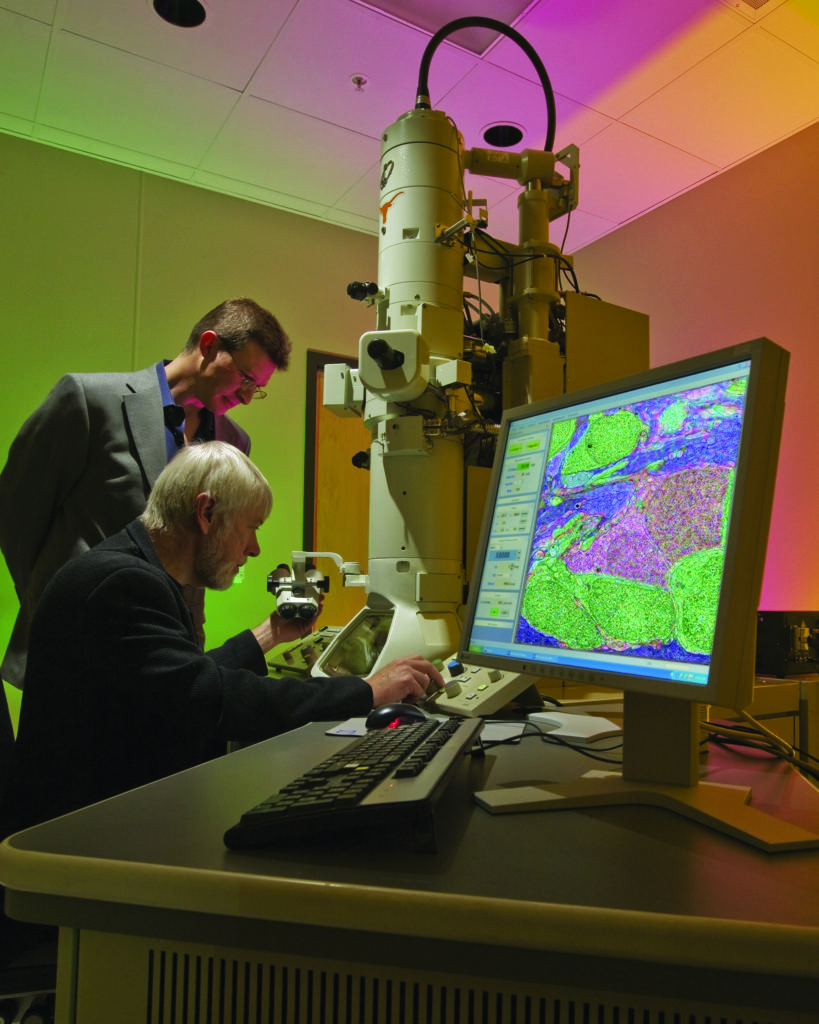
Bryan Jones, PhD, and Robert Marc, PhD
Bryan Jones, PhD, and Robert Marc, PhD.

References:

Issues Icon

Network architecture of gap junctional coupling among parallel processing channels in the mammalian retina. Sigulinsky CL, Anderson JR, Kerzner E, Rapp CN, Pfeiffer RL, Rodman TM, Emrich DP, Rapp KD, Nelson NT, Lauritzen JS, Meyer M, Marc RE, Jones BW. J. Neurosci. 2020 June 3;40(23):4483. PMID: 32332119 PMCID: PMC7275861

Issues Icon

A pathoconnectome of early neurodegeneration: Network changes in retinal degeneration. Pfeiffer RL, Anderson JR, Dahal J, Garcia JC, Yang J-H, Sigulinsky CL, Rapp K, Emrich DP, Watt CB, Johnstun HAB, Houser AR, Marc RE, Jones BW. Exp Eye Res. 2020 October;199:108196. PMID: 32810483 PMCID: PMC7554222

U of U Health Key Faculty Collaborator

Robert E. Marc, PhD

Unexpected Antiviral Activity of Spironolactone

Graphic- Unexpected Antiviral Activity of Spironolactone
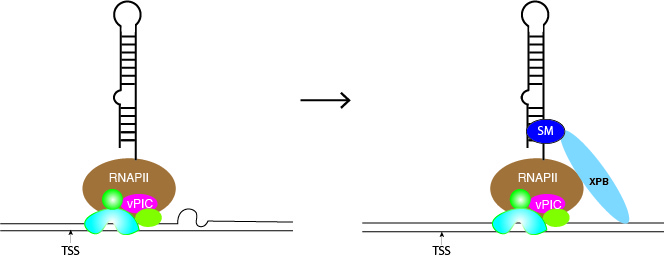
A model of how the Epstein–Barr virus (EBV) uses xeroderma pigmentosum group B-complementing protein(XPB) to facilitate viral RNA synthesis by (1) initiating transcription from a viral gene promoter at the transcriptional start site (TSS) via RNA polymerase II (RNAPII) (viral pre-initiation complex (vPIC) required for viral transcription also present), after which; (2) SM binds to newly transcribed RNA, and then; (3) recruits XPB to facilitate elongation of the RNA transcript.

Epstein–Barr virus (EBV) is a human herpesvirus associated with clinical infections and several types of malignancies. Sankar Swaminathan, MD, and colleagues showed that a hypertension/heart failure drug, spironolactone, also has anti-EBV effects. The antiviral activity of spironolactone is not related to its mineralocorticoid blocking activity relevant to hypertension/heart disease, but, instead, to its ability to inhibit the function of a protein SM that is essential for EBV replication. In the first demonstration of its kind, this research also showed that EBV SM protein activates viral gene transcription by utilizing xeroderma pigmentosum group B-complementing protein (XPB) as a cofactor. 

This is the first demonstration that XPB is utilized as an essential cofactor by a human herpesvirus. The XPB protein is degraded by spironolactone. Therefore, XPB may be a useful therapeutic target to control EBV and other human herpesviruses. Further, because the SM protein acts at stages of the viral life cycle different from those targeted by available therapies, these observations pave the way for the development of novel anti-EBV drugs that address emerging drug resistance and toxicity problems. 

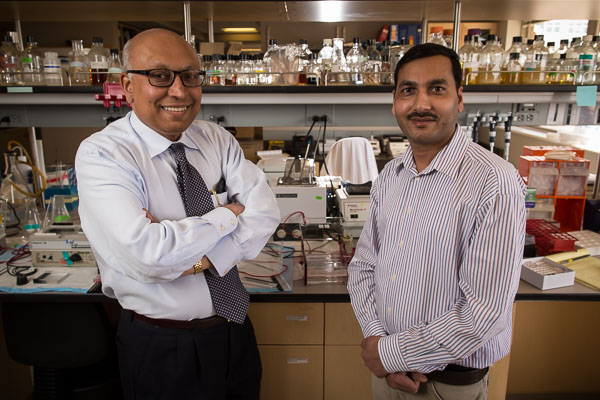
Sankar Swaminathan, MD, and Dinesh Verma, PhD.
Sankar Swaminathan, MD, and Dinesh Verma, PhD. Photo credit: Charlie Ehlert.

References:

Issues Icon

Spironolactone blocks Epstein–Barr virus production by inhibiting EBV SM protein function. Verma D, Thompson J, Swaminathan S. Proc Natl Acad Sci U S A. 2016 Mar 29;113(13):3609. Published online 2016 Mar 14. doi: 10.1073/pnas.1523686113

Issues Icon

Epstein–Barr virus co-opts TFIIH component XPB to specifically activate essential viral lytic promoters. Verma D, Church TM, Swaminathan S. Proc Natl Acad Sci U S A. 2020 June 9;117(23):13044. doi: 10.1 /pnas.2000625117

New Class of Therapy for Chronic Heart Failure

Graphic- New Class of Therapy for Chronic Heart Failure
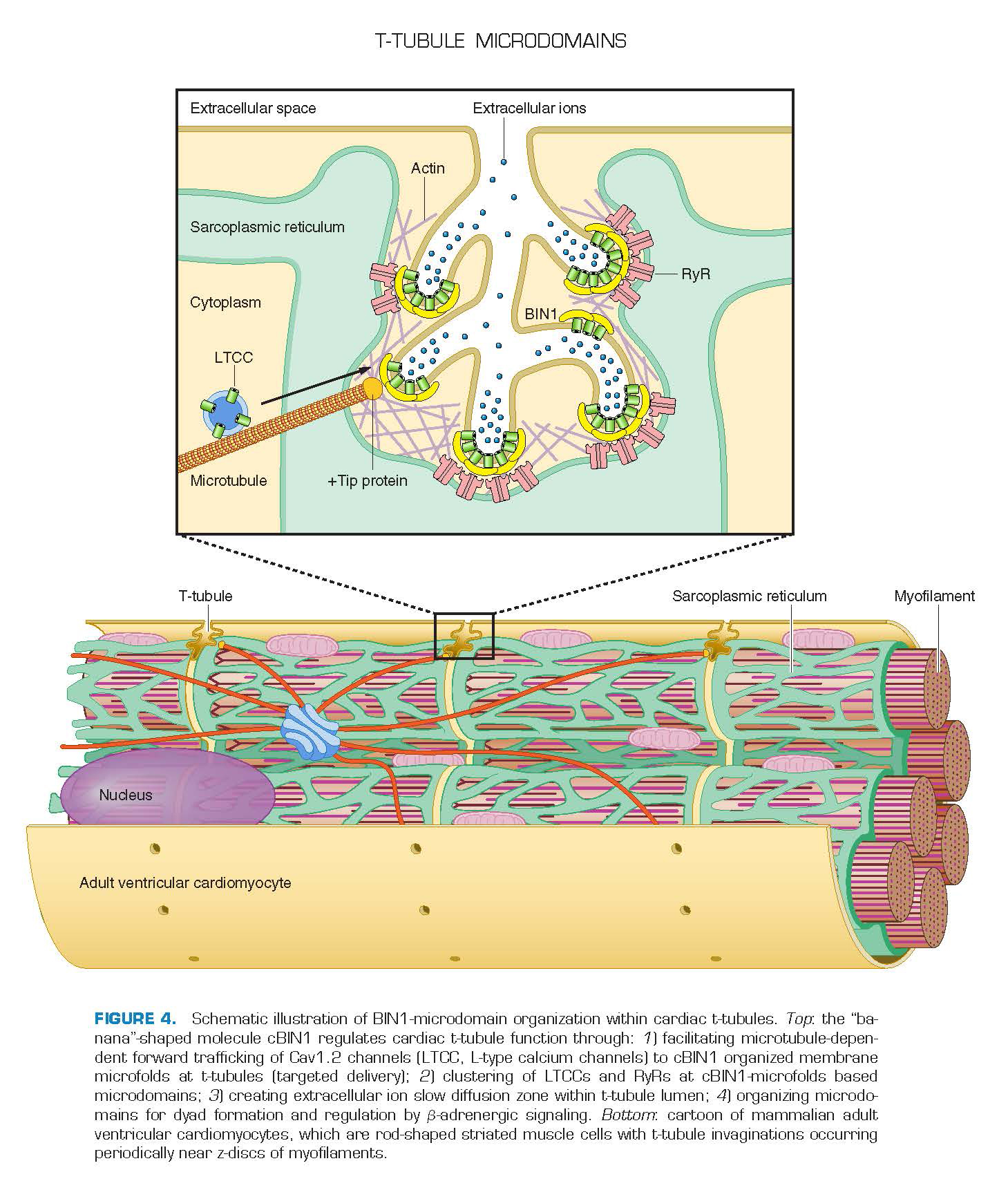
Schematic illustration of microdomain organization of the structural protein BIN-1 within t-tubules of the adult ventricular cardiomyocytes. Originally published in Physiol Rev. 2017 January;97(1):227.


In the US, heart failure affects approximately eight million people, carries a poor prognosis, and represents the single largest healthcare cost for people over 65 years old. Most heart failure therapies rely on blocking the deleterious effects of stress hormones on the heart, but therapies aimed at repairing failing heart muscles are lacking. The lab directed by Nora Eccles Harrison Presidential Endowed Chair Robin Shaw, MD, PhD, and Nora Eccles Harrison Cardiovascular Research & Training Institute (CVRTI) investigators, have identified an architectural protein (cBIN1) of heart muscle cells that organizes the intracellular signalizing network responsible for heart muscle contraction and relaxation. They found that lowering cBIN1 caused heart failure progression, and that, in animal models, replacement of cBIN1 by gene therapy rescued failing heart muscle and prevented death. Furthermore, they devised a cBIN1 blood test that can predict hospitalization and death caused by heart failure in patients. Shaw and his team are now preparing for preclinical development of a cBIN1-directed therapy for heart failure. Successful development of such a therapy will significantly improve the lives of Americans and economics of our health care system. 

References:

Issues Icon

BIN1 localizes the L-type calcium channel to cardiac T-tubules. Hong, T.T., et al., PLoS Biol. 2010 February 16; 8(2):e1000312.

Issues Icon

cBIN1 score (cs) identifies ambulatory HFrEF patients and predicts cardiovascular events. Hitzeman, T.C., et al., Front Physiol. 2020 May 25;11:503.

U of U Health Key Faculty Collaborators

TingTing Hong, MD, PhD

A Rapidly Manufacturable, Open-Source Ventilator for Austere Conditions

Graphic- A Rapidly Manufacturable, Open-Source Ventilator for Austere Conditions
The Pufferfish is a complete intensive care unit ventilator that can be rapidly and inexpensively manufactured in low-resource environments.

At the beginning of the COVID-19 pandemic, severe ventilator shortages led to dire situations both in developed regions and in low-resource regions where robust and affordable ventilators were already scarce. To address this urgent need, University of Utah Health researcher Kai Kuck, PhD, and colleagues developed Pufferfish, a complete intensive care unit ventilator capable of supporting the continuum from noninvasive ventilation to full mechanical ventilation. Development focused on rapid and low-cost local manufacturability, clinical usefulness, and versatility in austere environments. Pufferfish’s design is shared under open-source licenses, empowering local groups to address community needs on their own. 

This collaboration among the University of Utah, Stanford University, and Brown University expanded to include partners from Nepal, Kenya, and India. An initial version focusing on noninvasive ventilation is currently undergoing clinical testing and preparation for regulatory approval in Kenya, Nepal, and India, while an industrial partner in India is preparing for scaled production. Successful development of this ventilator has the potential to significantly improve mechanical ventilation support and expand critical care resources in austere and low-resource regions.

References:

Issues Icon

Utah-Stanford Ventilator (Vent4US): developing a rapidly scalable ventilator for COVID-19 patients with ARDS. Li H, Li E, Krishnamurthy D, Kolbay P, Chacin B, Hoehne S, Cybulski J, Brewer L, Petelenz T, Orr J, Sakata D, Clardy T, Kuck K, Prakash M. medRxiv. 2020 April:20070367.

See also: https://www.pez-globo.org/

U of U Key Faculty Collaborators

Lara Brewer, PhD
Bernhard Fassl, MD
Joseph A. Orr, PhD
Tomasz Petelenz
Derek J. Sakata, MD
James Agutter, PhD

Enhancing Decision-making for Diagnosis and Management of Respiratory Infection

Graphic- Enhancing Decision-making for Diagnosis and Management of Respiratory Infection
Adjusted risk ratios for 30-day mortality in patients hospitalized for pneumonia receiving empirical anti-MRSA (with or without standard antibiotics) compared to standard antibiotic therapy alone show that empirical anti-MRSA therapy was significantly associated with an increased risk of death except for the group in which MRSA was detected on respiratory or blood culture.

One of the greatest medical advances of the 20st century was the discovery of antibiotics, and one of the gravest medical threats of the 21st century is antibiotic resistance, largely driven by overuse of antibiotics. Many factors contribute to the overuse of antibiotics including societal expectation, misdiagnosis of infection, and lack of knowledge surrounding risks and benefits. Barbara Jones, MD, and Matthew Samore, MD, used national data from the Department of Veterans Affairs to examine decision-making and practice patterns among providers prescribing antibiotics for patients diagnosed with acute respiratory infection. Their research team demonstrated considerable variability in provider’s antibiotic prescribing practices as well as in their accuracy diagnosing patients with suspected pneumonia. They then assessed the effect of treatment choice on outcomes. The found that empirical broad-spectrum antibiotics targeting methicillin-resistant Staphylococcus aureus were associated with increased mortality in patients hospitalized for pneumonia. Current work is focused on providing clinicians with evidence-based decision support and feedback to support better clinical decisions.

References:

Issues Icon

 Variation in outpatient antibiotic prescribing for acute respiratory infections in the veteran population: a cross-sectional study. Jones BE, Sauer B, Jones MM, Campo J, Damal K, He T, Ying J, Greene T, Goetz MB, Neuhauser MM, Hicks LA, Samore MH. Ann Intern Med. 2015 Jul 21;163(2):73. PMID: 26192562.

Issues Icon

Trends in antibiotic use and nosocomial pathogens in hospitalized veterans with pneumonia at 128 medical centers, 2006-2010. Jones BE, Jones MM, Huttner B, Stoddard G, Brown KA, Stevens VW, Greene T, Sauer B, Madaras-Kelly K, Rubin M, Goetz MB, Samore M. Clin Infect Dis. 2015 Nov 1;61(9):1403. doi: 10.1093/cid/civ629. Epub 2015 Jul 29. PMID: 26223995; PMCID: PMC4599396.

Issues Icon

Variation in empiric coverage versus detection of methicillin-resistant staphylococcus aureus and pseudomonas aeruginosa in hospitalizations for community-onset pneumonia across 128 us Veterans Affairs medical centers. Jones BE, Brown KA, Jones MM, Huttner BD, Greene T, Sauer BC, Madaras-Kelly K, Rubin MA, Bidwell Goetz M, Samore MH. Infect Control Hosp Epidemiol. 2017 Aug;38(8):937. doi: 10.1017/ice.2017.98. Epub 2017 Jun 21. PMID: 28633678.

Issues Icon

Development and validation of a natural language processing tool to identify patients treated for pneumonia across VA emergency departments. Jones BE, South BR, Shao Y, Lu CC, Leng J, Sauer BC, Gundlapalli AV, Samore MH, Zeng Q. Appl Clin Inform. 2018 Jan;9(1):122. doi: 10.1055/s-0038-1626725. Epub 2018 Feb 21. PMID: 29466818; PMCID: PMC5821510.

Issues Icon

Empirical anti-mrsa vs standard antibiotic therapy and risk of 30-day mortality in patients hospitalized for pneumonia. Jones BE, Ying J, Stevens V, Haroldsen C, He T, Nevers M, Christensen MA, Nelson RE, Stoddard GJ, Sauer BC, Yarbrough PM, Jones MM, Goetz MB, Greene T, Samore MH. JAMA Intern Med. 2020 Apr 1;180(4):552.

Lipid Metabolism and Cardiometabolic Disease

Lipid Metabolism and Cardiometabolic Disease
Ceramides are signals of lipid excess that inhibit glucose utilization and induce lipid accumulation and hepaotocyte apoptosis – all key features of the Metabolic Syndrome.

Metabolic diseases such as diabetes, steatohepatitis, and coronary artery disease result from the delivery of nutrients that exceed a tissue’s energetic needs or storage capacity. The excess nutrients give rise to deleterious lipid species that impair cellular function. Summers and colleagues found that ceramides, a class of sphingolipids, alter the metabolism of liver and adipose tissue in a way that gives rise to cardiometabolic disease. They also discovered that removing a single double bond from ceramides is sufficient to restore metabolic homeostasis in diseased rodents. Lastly, they discovered that circulating ceramides were potent biomarkers of coronary artery disease. These results have inspired drug discovery efforts to lower ceramides and improve cardiometabolic health.

Scott Summers, PhD - Lipid Metabolism and Cardiometabolic Disease
Bhagirath Chaurasia, Ph.D., Scott Summers, Ph.D., Trevor Tippets. Photo credit: Charlie Ehlert

References:

Issues Icon

Targeting a ceramide double bond improves insulin resistance and hepatic steatosis. Chaurasia B, Tippetts TS, Mayoral Monibas R, Liu J, Li Y, Wang L, Wilkerson JL, Sweeney CR, Pereira RF, Sumida DH, Maschek JA, Cox JE, Kaddai V, Lancaster GI, Siddique MM, Poss A, Pearson M, Satapati S, Zhou H, McLaren DG, Previs SF, Chen Y, Qian Y, Petrov A, Wu M, Shen X, Yao J, Nunes CN, Howard AD, Wang L, Erion MD, Rutter J, Holland WL, Kelley DE, Summers SA. Science. 2019 Jul;365(6451):386.

Issues Icon

Metabolic messengers: Ceramides. Summers SA, Chaurasia B, Holland WL Nature Metabolism. 2019 Oct:1051

Issues Icon

Machine learning reveals serum sphingolipids as cholesterol-independent biomarkers of coronary artery disease. Poss AM, Maschek JA, Cox JE, Hauner BJ, Hopkins PN, Hunt SC, Holland WL, Summers SA, Playdon MC. J Clin Invest. 2019 Nov. pii: 131838.

Press Releases and Media:

Causes of Type 1 Diabetes

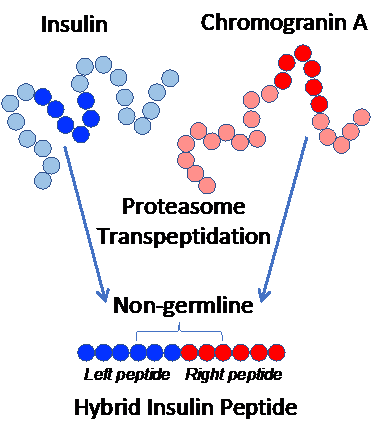
Two harmless peptides are fused to activate high affinity T cells in Type 1 diabetes.

More than 1 million Americans suffer from Type 1 diabetes, which occurs when a patient’s immune T cells attack their pancreas. Understanding why this occurs is key to developing treatments that target the cause and not just the symptoms of diabetes. Recent advances by Bettini, Evavold, Liu, and colleagues showed that specific fusions/modifications between insulin and other proteins create new immunological targets that allow pathogenic high-affinity T cells to escape tolerance, destroy pancreatic beta cells, and initiate Type 1 diabetes.

References:

Issues Icon

High self-reactivity drives T-bet and potentiates Treg function in tissue-specific autoimmunity. Sprouse ML, Scavuzzo MA, Blum S, Shevchenko I, Lee T, Makedonas G, Borowiak M, Bettini ML, Bettini M. JCI Insight. 2018 Jan;3(2). pii: 97322.

Issues Icon

A hybrid insulin epitope maintains high 2D affinity for diabetogenic T cells in the periphery. Liu B, Hood JD, Kolawole EM, Woodruff DM, Vignali DA, Bettini M, Evavold BD. Diabetes. 2019 Dec. pii: db190399.

Issues Icon

A critical insulin TCR contact residue selects high affinity and pathogenic insulin specific T cells. Bettini M, Scavuzzo MA, Liu B, Kolawole E, Guo L, Evavold BD, Borowiak M, Bettini ML. Diabetes. 2019 Dec. pii: db190821.

How Cells Choose to Create Energy

Schematic showing that low MPC expression in the intestinal epithelium predisposes for increased stemness and oncogenesis.

To supply their energy needs, cells typically choose between utilizing glucose in the cytoplasm (aerobic glycolysis and lactic acid fermentation) or “burning” pyruvate in the mitochondria (mitochondrial carbohydrate oxidation). Although this is arguably the most fundamental metabolic decision that cells make, before 2012 it was not clear how cells import pyruvate into mitochondria to fuel ATP production. That year, Rutter, Thummel, and colleagues identified the heterodimeric MPC1/MPC2 complex as the mitochondrial pyruvate carrier.

The group identified and explained the severe metabolic defects found in families with mpc1 gene mutations. Rutter and collaborators have subsequently shown that the choice of whether to import pyruvate has far-reaching medical implications because stem cells and most cancer cells are glycolytic (the “Warburg Effect”). They showed that this is often because cells down-regulate MPC expression, and MPC re-expression reverses the Warburg Effect, impedes tumor growth, and drives cell differentiation. These discoveries have revolutionized our understanding of the role of metabolic decisions in determining cell state and fate.

References:

Issues Icon

A mitochondrial pyruvate carrier required for pyruvate uptake in yeast, Drosophila, and humans. Bricker DK, Taylor EB, Schell JC, Orsak T, Boutron A, Chen YC, Cox JE, Cardon CM, Van Vranken JG, Dephoure N, Redin C, Boudina S, Gygi SP, Brivet M, Thummel CS, Rutter J. Science. 2012 Jul;337(6090):96.

Issues Icon

A role for the mitochondrial pyruvate carrier as a repressor of the Warburg effect and colon cancer cell growth. Schell JC, Olson KA, Jiang L, Hawkins AJ, Van Vranken JG, Xie J, Egnatchik RA, Earl EG, DeBerardinis RJ, Rutter J. Molecular Cell. 2014 Nov;56(3):400.

Issues Icon

A metabolic switch controls intestinal differentiation downstream of Adenomatous polyposis coli (APC). Sandoval IT, Delacruz RG, Miller BN, Hill S, Olson KA, Gabriel AE, Boyd K, Satterfield C, Van Remmen H, Rutter J, Jones DA. Elife. 2017 Apr;6. pii: e22706.

Issues Icon

Control of intestinal stem cell function and proliferation by mitochondrial pyruvate metabolism. Schell JC, Wisidagama DR, Bensard C, Zhao H, Wei P, Tanner J, Flores A, Mohlman J, Sorensen LK, Earl CS, Olson KA, Miao R, Waller TC, Delker D, Kanth P, Jiang L, DeBerardinis RJ, Bronner MP, Li DY, Cox JE, Christofk HR, Lowry WE, Thummel CS, Rutter J. Nature Cell Biology. 2017 Sep;19(9):1027.

Issues Icon

Regulation of tumor initiation by the mitochondrial pyruvate carrier. Bensard CL, Wisidigama DR, Olson KA, Berg JA, Krah NM, Schell JC, Bott AJ, Nowinski SM, Wei P, Dove KK, Tanner JM, Panic V, Fogarty SA, Cluntun A, Lettlova S, Earl CS, Namnath DF, Vázquez-Arregun K, Villanueva CJ, Tantin D, Murtaugh LC, Evason KJ, Ducker GS, Thummel CS, Rutter J. Cell Metabolism. 2019. Dec;Epublication ahead of print.

Press Releases and Media:

Text icon

University of Utah Health: Rewiring Metabolism Slows Cancer Growth

How Iron Deficiency Impairs Pancreatic β-Cell Function

Graphic- How Iron Deficiency Impairs Pancreatic β-Cell Function
Iron-regulatory protein-2 regulation of proinsulin processing and insulin secretion in pancreatic β-cells.

Diabetes is characterized by high blood glucose levels caused by the inability of pancreatic β-cells to produce sufficient insulin to meet the body’s needs. Diabetes is driven by both genetic and environmental factors. Excess body iron is one known risk factor in the development of diabetes. Iron deficiency is associated with obesity, a known diabetes risk factor. Research in the lab of Elizabeth Leibold, PhD, showed that in mice with iron deficiency, proinsulin processing to mature insulin was impaired, resulting in reduced levels of circulating and glucose intolerance. Mice treated with iron restored insulin to normal levels and eliminated the glucose intolerance. Further biochemical studies showed the precise molecular mechanism by which iron deficiency impairs insulin production in β-cells. These studies reveal a previously unidentified link between insulin processing and cellular iron deficiency that enhances our understanding of pathobiology of iron deficiency and diabetes, and may have therapeutic implications.

Reference:

Issues Icon

Irp2 regulates insulin production through iron-mediated Cdkal1-catalyzed tRNA modification. dos Santos MCF, Anderson CP, Neschen S, Zumbrennen-Bullough KB, Romney SJ, Kahle-Stephan M, Rathkolb B, Gailus-Durner V, Fuchs H, Wolf E, Rozman J, de Angelis MH, Cai WM, Rajan M, Hu J, Dedon PC, Leibold EA. Nat Commun. 2020 Jan;11(1):296.

Mechanisms of Circulatory Abnormalities and Fatigue in Patients with Cardiovascular Diseases

Graphic- Mechanisms of Circulatory Abnormalities and Fatigue in Patients with Cardiovascular Diseases
Experimental pharmacological blockade of group III/IV muscle afferents normalized the exaggerated systemic blood pressure increase and the suboptimal increase in leg blood flow during exercise in hypertensive patients to levels observed in normotensive individuals.

Premature fatigue, a hallmark of individuals with cardiovascular diseases such as heart failure or hypertension, substantially impairs the patients’ ability to effectively execute tasks of daily living. Although researchers long believed that patients’ abnormal circulatory response to physical activity contributed to this premature fatigue, they did not fully understand the mechanism(s)underlying the circulatory abnormalities. Markus Amann, PhD, and colleagues recently discovered that both heart failure and hypertension impair an important neurocirculatory control mechanism in humans—specifically, a reflex loop mediated by neural feedback from muscles to the central nervous system. This impairment results in excessive sympathetic nervous system activity, and largely accounts for the circulatory abnormalities observed during physical activities. In additional experiments, Amann’s group demonstrated that the mechanism underlying the impaired circulatory control also accounts for the premature fatigue and limited ability to execute tasks of daily living in patients with cardiovascular diseases.

References:

Issues Icon

Group III/IV muscle afferents impair limb blood in patients with chronic heart failure. Amann M, Venturelli M, Ives SJ, Morgan DE, Gmelch B, Witman MA, Groot HJ, Wray WD, Stehlik J, Richardson RS. Int J Cardiol. 2015 June 15;174(2):368.

Issues Icon

Exercise pressor reflex contributes to the cardiovascular abnormalities characterizing hypertensive humans during exercise. Sidhu SK, Weavil JC, Rossman MJ, Jessop JE, Buys MJ, Supiano MS, Richardson RS, Bledsoe AD, Amann M. Hypertension. 2019 December;74(6):1468.

Architecture of the Inner Ear

3D printing model for complex extracellular matrix. (A) PSA-lectin staining of the developing cochlea shows the complex matrix architecture of the tectorial membrane of the inner ear. (B) 3D printing model: printing of a new layer and simultaneous release of pre-established layer to build a multi-layered structure.

Normal hearing is dependent upon a highly specialized structure in the inner ear called the tectorial membrane. How this precisely organized extracellular matrix is assembled had been unknown. However, Park and colleagues showed the inner ear membrane anchors to the cell surface during development and grows one layer at a time. This process depends upon anchoring and then release of the GPI-anchored protein TECTA. Once a layer is formed, TECTA is released, and the next layer is ‘printed’ underneath it. The mechanism is similar to 3D printing and eventually results in a multi-layered architecture. This proposed 3D printing model provides novel insight into our understanding of the extracellular matrix morphogenesis process during development and tissue repair.

References:

Issues Icon

The release of surface-anchored α-tectorin, an apical extracellular matrix protein, mediates tectorial membrane organization. Kim DK, Kim JA, Park J, Niazi A, Almishaal A, Park S. Sci Adv. 2019 Nov;5(11):eaay6300.

Press Releases and Media:

Gene Expression and Health Risks

An analysis of accelerated evolution in species with highly distinctive traits reveals candidate functional genomic elements for shaping somatic mutation rate, cancer risk, digit development, immunity, glaucoma, pigmentation, and other clinical phenotypes.

An important area of research involves learning how gene expression influences health and disease risks. The parts of the genome that regulate gene expression are cis-regulatory elements. Gregg and colleagues took an unusual approach to discover these cis-regulatory elements by analyzing the genomes of species that evolved disease resistance “superpowers”. For example, elephants have large bodies with many cells and have evolved unique mechanisms to prevent cancer. By comparing the elephant genome to smaller, less cancer-resistant species, they uncovered putative master cis-regulatory elements in the genome that shape mammalian cancer resistance.

In a separate study, they studied hibernating mammals that have evolved unique controls over metabolism, obesity, and aging. By comparing their genomes to non-hibernating species, they found cis-regulatory elements that are putative master regulators of mammalian obesity, feeding, metabolism, and aging. In total, the Gregg lab has analyzed the genomes of over ten species with different biomedical superpowers, creating an atlas of cis-regulatory elements linked to clinically relevant phenotypes.

References:

Press Releases and Media:

How Microbes Make Drug-like Molecules

An anti-HIV peptide obtained by mining the animal microbiome.

Many life-saving drugs come from natural sources such as microbes. Learning how host organisms produce these drugs is an area of intense interest because scientists could exploit the pathways to produce more and better drug variants. Schmidt and colleagues have elucidated the mechanisms by which microbes produce one class of drug-like molecules, the Ribosomally-synthesized and Post-translationally modified Peptides (RiPPs). Bioactive RiPPs are produced from a precursor peptide, which is modified by enzymes.

The research group identified specific biosynthetic pathways that produce such discrete natural product compounds, which have potential as human therapeutics. These discoveries demonstrate how modern metagenomic methods can elucidate the vast repertoire of natural products that were inaccessible using traditional isolation methods. The insights now influence how other investigators in the natural products field tailor their investigations to discover novel drugs as potential lead therapeutics.

References

Issues Icon

Metabolic model for diversity-generating biosynthesis. Tianero MD, Pierce E, Raghuraman S, Sardar D, McIntosh JA, Heemstra JR, Schonrock Z, Covington BC, Maschek JA, Cox JE, Bachmann BO, Olivera BM, Ruffner DE, Schmidt EW. Proc Natl Acad Sci USA. 2016 Feb;113(7):1772.

Issues Icon

Accessing chemical diversity from the uncultivated symbionts of small marine animals. Smith TE, Pond CD, Pierce E, Harmer ZP, Kwan J, Zachariah MM, Harper MK, Wyche TP, Matainaho TK, Bugni TS, Barrows LR, Ireland CM, Schmidt EW. Nat Chem Biol. 2018 Feb;14(2):179.

Issues Icon

The biosynthetic diversity of the animal world. Torres JP, Schmidt EW. J Biol Chem. 2019 Nov;294(46):17684.

An EHR Clinical Support App for Monitoring Bilirubin Levels

The ReImagine EHR app used to monitor bilirubin levels over time, alerting the clinical team when intervention is necessary.

Electronic health records (EHR) are a rich source of clinical and research data, but clinicians and researchers often cannot access this information efficiently. The Department of Biomedical Informatics has developed the ReImagineEHR initiative to improve the functionality of electronic health record systems. Faculty members del Fiol and Kawamoto led this effort by developing and implementing the infobutton international standard for clinical decision support and develop platforms that enable clinicians to obtain more information from electronic medical records with less effort. A prime example of the innovation from this group is the Neonatal Bilirubin Management Tool, which decreases physician EHR usage time and guides the prescription of phototherapy as needed, thereby improving physician efficiency and patient care.

References:

Issues Icon

Association of an electronic health record add-on App for neonatal bilirubin management with physician efficiency and care quality. Kawamoto K, Kukhareva P, Shakib JH, Kramer H, Rodriguez S, Warner PB, Shields D, Weir C, Del Fiol G, Taft T, Stipelman CH. JAMA Netw Open. 2019 Nov;2(11):e1915343.

Drug-Free Macromolecular Therapeutics

DFMT exploits the selective Watson-Crick base-pairing properties of oligonucleotides to tether receptor-prebound antibodies to receptors at the cell surface.

Monoclonal antibody therapy has numerous benefits but can lack efficacy, often because monovalent binding of antibodies to specific receptors fails to translate into an active response. The Kopeček laboratory has built on their track record in polymeric drug delivery to develop a novel approach to therapeutic design, termed “Drug-Free Macromolecular Therapeutics (DFMT)”. DFMT exploits the selective Watson-Crick base-pairing properties of oligonucleotides to tether receptor-prebound antibodies to receptors at the cell surface.

This two-step self-assembly strategy uses both sequential receptor binding and clustering to broaden and strengthen antibody functions, including the anti-CD20 antibody obinutuzumab, which increases apoptotic cell death in cancer cells both in vitro and in vivo. Their second-generation DFMT combines the activation pathways of Type I and Type II antibodies into one system and will be developed into a new class of drug-free macromolecular therapeutics suitable for a broad spectrum of B-cell malignancies, including treatment-resistant tumors.

References:

Issues Icon

Broadening and enhancing functions of antibodies by self-assembling multimerization at cell surface. Li L, Wang J, Li Y, Radford DC, Yang J, Kopeček J ACS Nano. 2019 Oct;13(10):11422.

Determinants of Fat Tissue Expansion

Unanticipated heterogeneity in the cell populations that comprise adipose depots.

Adipose tissue (fat) is a complicated organ that can undergo massive expansion in response to nutritional overload. The Boudina lab discovered adipose progenitors with potent anti-adipogenic potential. These cells, which are unique to visceral fat and found in both humans and mice, could explain the propensity of visceral fat to grow by hypertrophy in response to caloric excess. They also identified a set of regulatory events that control healthy adipose expansion. This finding of heterogeneity in the adipose tissue reveals potential opportunities for therapeutic intervention to enable healthy adipose expansion and combat cardiometabolic disease.

References:

Issues Icon

Identification of a paracrine signaling mechanism linking CD34High progenitors to the regulation of visceral fat expansion and remodeling. Buffolo M, Pires KM, Ferhat M, Ilkun O, Makaju A, Achenbach A, Bowman F, Atkinson DL, Holland WL, Amri EZ, Chaurasia B, Franklin S, Boudina S. Cell Rep. 2019 Oct;29(2):270.

Bone-Anchored Devices that Permanently Pass Through the Skin to Maximize Amputee Function

A common orthopedic approach to recreating damaged joints is to securely attach a metal implant to the patient’s own bone, a process known as osseointegration. Our research  explores a new approach by engineering percutaneous osseointegration devices, in which the metal implant that pass permanently through the skin and permit connection to an external prosthetic limb when desired. The connection can not only be accomplished easily as needed; it also improves the function of the prosthesis. A team of researchers at the University of Utah has conducted a variety of engineering and animal studies of this innovative device, which  culminated in the approval and successful completion of an FDA feasibility study in a population of 10 veterans with transfemoral amputations. The team is now conducting a larger multicenter trial in that population and is initiating a second feasibility study on patients with transhumeral amputation. The long-term goal of this research is to help maximize both functional recovery and quality of life among amputees.

References:

Issues Icon

Percutaneous implants with porous titanium dermal barriers: an in vivo evaluation of infection risk. Isackson D, McGill LD, Bachus KN. Med Eng Phys. 2011 May;33(4):418. doi:10.1016/j.medengphy. 2010.11.007. Epub 2010 Dec 10. PMID: 21145778; PMCID: PMC3071885

Issues Icon

Cortical bone response to the presence of load-bearing percutaneous osseointegrated prostheses. Jeyapalina S, Beck JP, Bachus KN, Bloebaum RD. Anat Rec (Hoboken). 2012 Sep;295(9):1437. doi: 10.1002/ar.22533. Epub 2012 Jul 16. PMID: 22807281.

Issues Icon

Radiographic evaluation of bone adaptation adjacent to percutaneous osseointegrated prostheses in a sheep model. Jeyapalina S, Beck JP, Bachus KN, Chalayon O, Bloebaum RD. Clin Orthop Relat Res. 2014 Oct;472(10):2966. doi: 10.1007/s11999-014-3523-z. PMID: 24557934; PMCID: PMC4160482.

Issues Icon

Progression of bone ingrowth and attachment strength for stability of percutaneous osseointegrated prostheses. Jeyapalina S, Beck JP, Bloebaum RD, Bachus KN. Clin Orthop Relat Res. 2014 Oct;472(10):2957. doi: 10.1007/s11999-013-3381-0. PMID: 24258685; PMCID: PMC4160472.

Issues Icon

Transhumeral loading during advanced upper extremity activities of daily living. Drew AJ, Izykowski MT, Bachus KN, Henninger HB, Foreman KB. PLoS ONE. 2017 December 19;12(12): e0189418. https://doi.org/10.1371/journal.pone.0189418

Issues Icon

Characterization and evaluation of fluoridated apatites for the development of infection-free percutaneous devices. Bennett BT, Beck JP, Papangkorn K, Colombo JS, Bachus KN, Agarwal J, Shieh JF, Jeyapalina S. Mater Sci Eng C Mater Biol Appl. 2019 Jul;100:665. doi: 10.1016/j.msec.2019.03.025. Epub 2019 Mar 12. PMID: 30948103. 

Issues Icon

Sex and laterality differences in medullary humerus morphology. Drew AJ, Tashjian RZ, Henninger HB, Bachus KN. Anat Rec (Hoboken). 2019 Oct;302(10):1709. doi: 10.1002/ar.24138. Epub 2019 May 1. PMID: 30989818; PMCID: PMC6767548. 

Issues Icon

Variation in bone response to the placement of percutaneous osseointegrated endoprostheses: A 24-month follow-up in sheep. Jeyapalina S, Beck JP, Drew A, Bloebaum RD, Bachus KN. PLoS One. 2019 Oct 25;14(10):e0221850. doi: 10.1371/journal.pone.0221850. PMID: 31652276; PMCID: PMC6814231.

Issues Icon

Initial stability of a percutaneous osseointegrated endoprosthesis with proximal interlocking screws for transhumeral amputees. Drew AJ, Taylor CE, Tashjian RZ, Chalmers PN, Henninger HB, Bachus KN. Clin Biomech (Bristol, Avon). 2020 Feb;72:108. doi: 10.1016/j.clinbiomech.2019.12.005. Epub 2019 Dec 6. PMID: 31862604; PMCID: PMC7414792.

Issues Icon

Estimated forces and moments experienced by osseointegrated endoprostheses for lower extremity amputees. Taylor CE, Zhang Y, Qiu Y, Henninger HB, Foreman KB, Bachus KN. Gait Posture. 2020 Jul;80:49. doi: 10.1016/j.gaitpost.2020.05.018. Epub 2020 May 20. PMID: 32485424; PMCID: PMC7417188.

Issues Icon

Upper extremity prosthetic selection influences loading of transhumeral osseointegrated systems. Taylor CE, Drew AJ, Zhang Y, Qiu Y, Bachus KN, Foreman KB, Henninger HB. PLoS One. 2020 Aug 6;15(8):e0237179. doi: 10.1371/journal.pone.0237179. PMID: 32760149; PMCID: PMC7410272.

Issues Icon

Replicating dynamic humerus motion using an industrial robot. Aliaj, K, Feeney GM, Sundaralingam B, Hermans T, Foreman KB, Bachus KN, Henninger HB. PLoS One. 2020 Nov 9;15(11):e0242005.

Issues Icon

Cortical and medullary morphology of the tibia. Taylor, CE, Henninger, HB,  Bachus, KN. Anat Rec.  2021 March;304(3):507. https://doi.org/10.1002/ar.24479

Press Releases and Media

U of U Health Key Faculty Collaborators:

Sarina K. Sinclair, PhD
Heath B. Henninger, PhD
Roy D. Bloebaum, PhD

Analyzing Human Pedigrees to Advance Genetics and Health

Journal cover highlighting the first direct estimate of retrotransposition rates in whole-genome sequenced data from three-generation CEPH pedigrees.

Well curated human pedigrees like the iconic pedigrees maintained by the Centre d’Etude du Polymorphism Humain (CEPH) provide an invaluable resource for fundamental discoveries in human genetics and health. The CEPH collection includes families collected by R. White (Utah), J. Dausset (French), J. Gusella (Venezuelan), and J. Egeland (Amish). A significant and unique contribution from the University of Utah has been whole genome sequencing of the CEPH pedigrees, which has already produced two studies describing fundamental aspects of human genetics.

Quinlan, Jorde, and colleagues used these data to demonstrate that 10% of de novo human mutations are post-zygotic early embryonic events rather than inherited germline mutations, which has important implications for estimating disease risks in families. They also demonstrated that germline mutation rates vary substantially among families and that fathers contribute approximately ¾ of new single-gene mutations. The whole-genome pedigree data provided the first direct estimate of the rate at which mobile elements (“jumping genes”) insert into new locations in human genomes. These mobile elements constitute about half of the human genome and have significant effects on genetic variation and disease.

References:

Issues Icon

Large, three-generation human families reveal post-zygotic mosaicism and variability in germline mutation accumulation. Sasani TA, Pedersen BS, Gao Z, Baird L, Przeworski M, Jorde LB, Quinlan AR. Elife. 2019;8. pii: e46922.

Issues Icon

Pedigree-based estimation of human mobile element retrotransposition rates. Feusier J, Watkins WS, Thomas J, Farrell A, Witherspoon DJ, Baird L, Ha H, Xing J, Jorde LB. Genome Res. 2019 Oct;29(10):1567 (cover article).

Press Releases and Media:

Cellular Origins of Pancreatic Cancer

Histological sections of mouse pancreas, stained for the acinar marker Cpa1 (blue) and the tumor marker Claudin18 (brown). Re-expressing Ptf1a in tumor cells causes them to revert back into normal acinar cells.

Our pancreas has two main functions, endocrine control of blood sugar and exocrine production of the enzymes that digest our food. These enzymes are synthesized by pancreatic acinar cells and transported to the intestine through a network of pancreatic duct cells. Pancreatic cancer, the third deadliest cancer in the U.S., was previously assumed, based on histology and gene expression, to arise from duct cells.

However, research in the Murtaugh lab demonstrated that this cancer instead arises from fully differentiated acinar cells. This process requires a dramatic reprogramming of cellular function, resulting from the downregulation of the transcription factor Ptf1a, which is a rate-limiting step in pancreatic cancer development. The Murtaugh lab has found that reactivating Ptf1a in mouse and human pancreatic cancer induces re-differentiation and inhibits growth, and is pursuing this as a novel therapeutic approach.

References:

Issues Icon

The acinar differentiation determinant PTF1A inhibits initiation of pancreatic ductal adenocarcinoma. Krah NM, De La O JP, Swift GH, Hoang CQ, Willet SG, Chen Pan F, Cash GM, Bronner MP, Wright CV, MacDonald RJ, Murtaugh LC. Elife. 2015 Jul;4. pii 07125.

Issues Icon

Prevention and reversion of pancreatic tumorigenesis through a differentiation-based mechanism. Krah NM, Narayanan SM, Yugawa DE, Straley JA, Wright CVE, MacDonald RJ, Murtaugh LC. Dev Cell. 2019 Sep;50(6):744.

Press Releases and Media:

Biological Consequences of Reduced Energy Flux and Inefficient Energy Generation

Alterations in the mitochondrial phospholipid underlie changes in mitochondrial efficiency that precede diabetes and liver and heart disease.

Energy transfer processes are never perfectly efficient. Funai and colleagues have discovered that the degree of inefficiency in cellular energy exchange, particularly during oxidative phosphorylation, has important biological implications. They found that decreased mitochondrial energy flux, such as that occurring with obesity or sedentary behavior, remodels the lipid composition of the mitochondrial inner membrane. Such aberrant changes are sufficient to decrease the efficiency of oxidative phosphorylation and promote respiratory failure in diaphragm muscle, fibrosis in the liver, hypertrophic cardiomyopathy in the heart, and defective thermogenesis in the adipose tissues. These studies suggest potential therapies for improving tissue energetics to treat diabetes and heart disease.

References:

Issues Icon

Peroxisome-derived lipids regulate adipose thermogenesis by mediating cold-induced mitochondrial fission. Park H, He A, Tan M, Johnson JM, Dean JM, Pietka TA, Chen Y, Zhang X, Hsu FF, Razani B, Funai K, Lodhi IJ. J Clin Invest. 2019 Feb 1;129(2):694.

Issues Icon

Phospholipid methylation regulates muscle metabolic rate through Ca2+ transport efficiency. Verkerke ARP, Ferrara PJ, Lin C, Johnson JM, Ryan TE, Maschek JA, Eshima H, Paran CW, Laing BT, Siripoksup P, Tippetts TS, Wentzler EJ, Huang H, Spangenburg EE, Brault JJ, Villanueva CJ, Summers SA, Holland WL, Cox JE, Vance DE, Neufer PD, Funai K. Nature Metabolism. 2019 Sept; 1:876.

Issues Icon

Mitochondrial PE potentiates respiratory enzymes to amplify skeletal muscle aerobic capacity. Heden TD, Johnson JM, Ferrara PJ, Eshima H, Verkerke ARP, Wentzler EJ, Siripoksup P, Narowski TM, Coleman CB, Lin CT, Ryan TE, Reidy PT, de Castro Brás LE, Karner CM, Burant CF, Maschek JA, Cox JE, Mashek DG, Kardon G, Boudina S, Zeczycki TN, Rutter J, Shaikh SR, Vance JE, Drummond MJ, Neufer PD, Funai K. Sci Adv. 2019 Sep;5(9):eaax8352.

Press Releases and Media: