Risks of Cannabis During Pregnancy

Graphic - Risks of Cannabis During Pregnancy
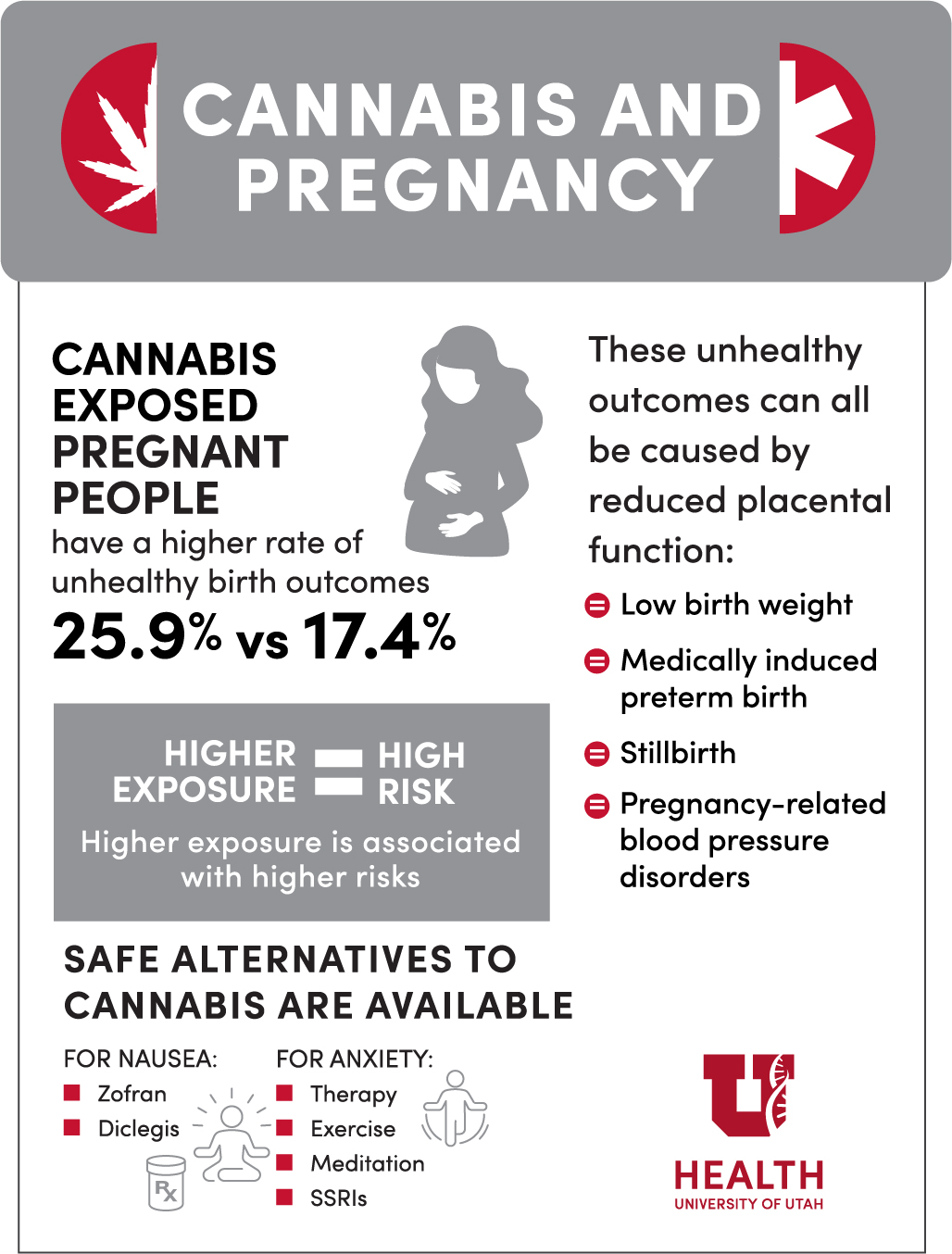
Cannabis use is increasing among reproductive age females. However, the effects of cannabis use on pregnancy and pregnancy outcomes remains largely unknown. Torri Metz, MD, MS, vice chair of research of obstetrics and gynecology, and Robert Silver, MD, professor and chair of obstetrics and gynecology, examined if cannabis use during pregnancy was associated with adverse pregnancy outcomes mediated by the placenta.

They analyzed the pregnancy outcomes of more than 9,000 people, including 610 who used cannabis during their pregnancies. Because self-reports of cannabis use can be unreliable, they used urine samples to estimate study participants’ exposure. After controlling for variables like socioeconomic status, nicotine use, and certain medical conditions

they found that individuals who used cannabis had a higher frequency of a composite adverse outcome which included small for gestational age babies (<5th percentile for age and sex), hypertensive disorders of pregnancy, medically indicated preterm birth and stillbirth. In addition, they found that ongoing use throughout pregnancy, and heavier use were associated with a higher risk of adverse pregnancy outcomes. Information about the risks of maternal cannabis use will be critical in counseling patients so they can make informed decisions about cannabis use during pregnancy.

References:

Issues Icon

Cannabis Exposure and Adverse Pregnancy Outcomes Related to Placental Function. Metz TD, Allshouse AA, McMillin GA, et al. JAMA. 2023;330(22):2191–2199. doi:10.1001/jama.2023.21146

Press Releases and Media:

Diabetes Drug Protects Against Muscle Loss

As we get older, it can be harder to bounce back from injury or prolonged periods of bed rest. That’s partly because it takes older adults longer to rebuild muscles that have atrophied due to disuse. The resulting weakness can limit mobility and put people at risk for falls, hospitalization, and even chronic disease. Encouragingly, it may be possible to protect older adults against muscle loss with a drug that millions of people already take. Continue reading → Diabetes Drug Protects Against Muscle Loss

Continue reading → Diabetes Drug Protects Against Muscle Loss

Uncovering Disparities that Impact Heart Health

Photo for "Uncovering Disparities that Impact Heart Health" entry, featuring happy multi generational people having fun together at city park while hugging each other.


About 40 million adults in the United States take statin drugs to reduce their risk of heart disease and stroke. The drugs, which lower levels of LDL cholesterol, are considered safe for most people, and for many, their potential benefits are high. Many people who might benefit from statins, however, aren’t taking them.

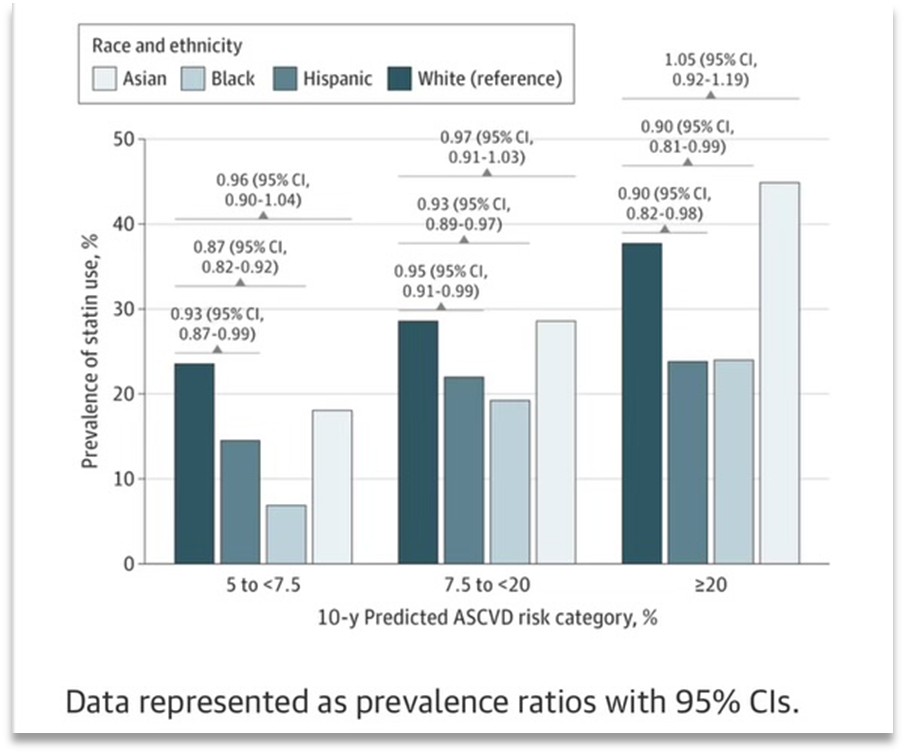
Graduate student Joshua Jacobs and Adam Bress, PharmD, MS, associate professor of population health sciences, analyzed data from National Health and Nutrition Examination Surveys completed between 2013 and 2020 and found the drugs are underutilized, particularly among Black and Hispanic Americans. Jacobs looked at data from more than 3,400 people and found that only about 30 percent of those with the highest risk of developing a cardiovascular problem in the next 10 years were taking statins. While 28 percent of White participants were being treated with the drugs, only 15 percent of Hispanic and 20 percent of Black participants were.

Although statins are among the most prescribed drugs in the United States, many patients who might benefit aren’t taking them. The findings highlight disparities in care and a need to identify barriers to treatment.

Graphic - Uncovering Disparities that Impact Heart Health

References:

Press Releases and Media:

Interactive Icon

CNN

Telehealth to Address Perinatal Depression

The debilitating sadness and anxiety of perinatal depression can strike during pregnancy or emerge in the weeks or months that follow. The condition, which affects up to 20 percent of pregnant women, can make even routine tasks and self-care a challenge, not to mention caring for an infant. Continue reading → Telehealth to Address Perinatal Depression

Continue reading → Telehealth to Address Perinatal Depression

Controlling the Spread of Antibiotic Resistance

Healthcare-associated infections due to antibiotic-resistant bacteria are costly and deadly. Michael Rubin, MD, and Matthew Samore, MD, generated new evidence on the effect of infection-prevention practices on the transmission of antibiotic-resistant pathogens, particularly methicillin-resistant Staphylococcus aureus (MRSA). Continue reading → Controlling the Spread of Antibiotic Resistance

Continue reading → Controlling the Spread of Antibiotic Resistance

The Levonorgestrel Intrauterine Device is Effective as Emergency Contraception

The U.S. Healthy People 2020 initiative aims to improve pregnancy planning and increase access to the full range of contraceptive methods. Utah presents unique barriers to contraceptive services, including limited public funding and geographical regions with limited family planning services. Continue reading → The Levonorgestrel Intrauterine Device is Effective as Emergency Contraception

Continue reading → The Levonorgestrel Intrauterine Device is Effective as Emergency Contraception

Effectiveness of Physical Therapy for Back Pain

Julie Fritz, PhD, and colleagues have conducted a series of rigorous randomized clinical trials examining patients with acute back pain, back pain accompanied by sciatica, and back pain due to spinal stenosis. Their recent study found that patients with back pain and sciatica who were referred to physical therapy for treatment with exercise and manual therapy were more likely to rate their treatment as successful and reported significantly greater reductions in pain and disability than patients who were not referred. Continue reading → Effectiveness of Physical Therapy for Back Pain

Continue reading → Effectiveness of Physical Therapy for Back Pain

Enhancing Decision-making for Diagnosis and Management of Respiratory Infection

Barbara Jones, MD, and Matthew Samore, MD, used national data from the Department of Veterans Affairs to examine decision-making and practice patterns among providers prescribing antibiotics for patients diagnosed with acute respiratory infection. Continue reading → Enhancing Decision-making for Diagnosis and Management of Respiratory Infection

Continue reading → Enhancing Decision-making for Diagnosis and Management of Respiratory Infection

Elective Labor Induction in First-Time Moms at 39 Weeks of Gestation

The optimal timing of delivery for low-risk pregnancies is not known. Risks of complications increase after 39 weeks of gestation, but inducing labor may increase the need for cesarean delivery, leading to policies prohibiting elective induction before 41 weeks. To address this dilemma, Robert Silver, MD, and colleagues at the University of Utah Department of Obstetrics & Gynecology randomized 6,106 low-risk, first-time pregnant women to either induction of labor at 39 weeks or expectant management. Continue reading → Elective Labor Induction in First-Time Moms at 39 Weeks of Gestation

Continue reading → Elective Labor Induction in First-Time Moms at 39 Weeks of Gestation

HER Salt Lake City Contraceptive Initiative and Family Planning Elevated

The U.S. Healthy People 2020 initiative aims to improve pregnancy planning and increase access to the full range of contraceptive methods. Utah presents unique barriers to contraceptive services, including limited public funding and geographical regions with limited family planning services. Continue reading → HER Salt Lake City Contraceptive Initiative and Family Planning Elevated

Continue reading → HER Salt Lake City Contraceptive Initiative and Family Planning Elevated

Individualized Venous Thromboembolism Risk Stratification and Chemoprophylaxis in Surgical Patients

The research team of Christopher Pannucci, MD, and Benjamin Brooke, MD, set out to determine whether chemoprophylaxis for VTE among surgical patients could be better achieved through individualized risk stratification using established Caprini scores. They performed a meta-analysis of nearly 15,000 surgery patients, stratified by Caprini scores for VTE risk levels. Continue reading → Individualized Venous Thromboembolism Risk Stratification and Chemoprophylaxis in Surgical Patients

Continue reading → Individualized Venous Thromboembolism Risk Stratification and Chemoprophylaxis in Surgical Patients

Translating Influenza Immunization in Pregnancy into Infant Immunity

Infants with influenza are at increased risk for adverse outcomes, particularly in the first six months when they are unable to mount a sufficient response to influenza immunization. Few large-scale studies have evaluated the impact of maternal immunization during pregnancy on subsequent infant influenza outcomes. To address this gap, Julie Shakib, DO, and colleagues conducted a retrospective cohort study of 245,386 pregnant women and their infants over nine influenza seasons. They found that infants born to women reporting influenza immunization during pregnancy had risk reductions of 70% for influenza infection and 81% for influenza hospitalization in the first six months. Continue reading → Translating Influenza Immunization in Pregnancy into Infant Immunity

Continue reading → Translating Influenza Immunization in Pregnancy into Infant Immunity

Age-Related Sarcopenia and Recovery Following Muscle Disuse

Aging coincides with frequent periods of muscle disuse and, when combined with subsequent poor muscle recovery, contributes to sarcopenia, loss of muscle during aging. In order to develop effective interventions to offset deficits in muscle mass and function, Micah Drummond, PhD, and colleagues studied the cellular and molecular events that accompany muscle disuse in older adults. Continue reading → Age-Related Sarcopenia and Recovery Following Muscle Disuse

Continue reading → Age-Related Sarcopenia and Recovery Following Muscle Disuse

Readmission Destination and the Risk of Mortality Following Major Surgery

University of Utah Health investigator Benjamin Brooke, MD, PhD, and colleagues sought to determine whether patients who are readmitted following major surgery achieve better outcomes if they return to the same hospital and surgeons who performed their initial operation. Continue reading → Readmission Destination and the Risk of Mortality Following Major Surgery

Continue reading → Readmission Destination and the Risk of Mortality Following Major Surgery