

Robert M. Silver, MD
Link: More infoBio: Robert M. Silver, MD. Department of Obstetrics and Gynecology, School of Medicine, University of Utah.


Discovery and Innovation at University of Utah Health
Digital Collection
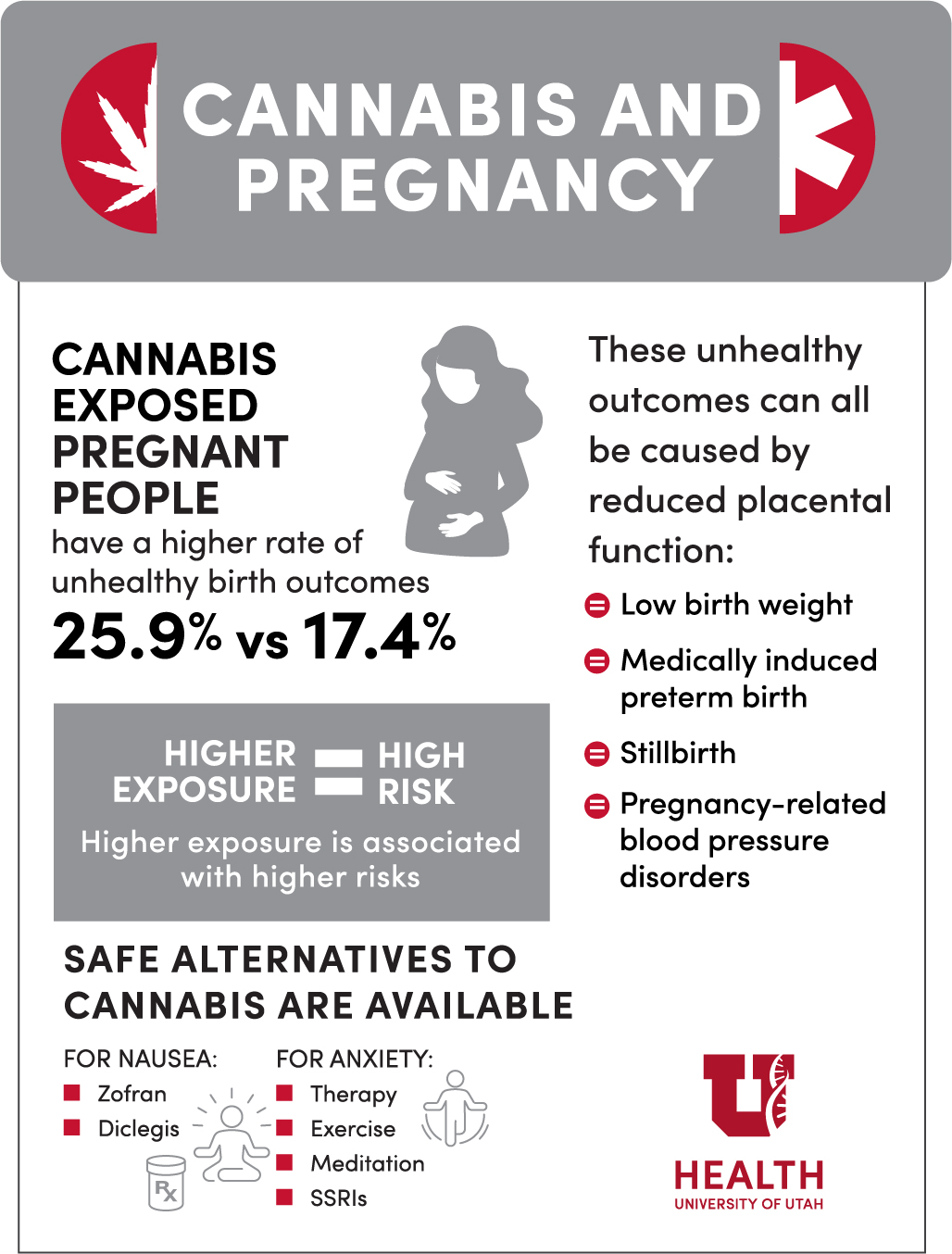
Cannabis use is increasing among reproductive age females. However, the effects of cannabis use on pregnancy and pregnancy outcomes remains largely unknown. Torri Metz, MD, MS, vice chair of research of obstetrics and gynecology, and Robert Silver, MD, professor and chair of obstetrics and gynecology, examined if cannabis use during pregnancy was associated with adverse pregnancy outcomes mediated by the placenta.
They analyzed the pregnancy outcomes of more than 9,000 people, including 610 who used cannabis during their pregnancies. Because self-reports of cannabis use can be unreliable, they used urine samples to estimate study participants’ exposure. After controlling for variables like socioeconomic status, nicotine use, and certain medical conditions
they found that individuals who used cannabis had a higher frequency of a composite adverse outcome which included small for gestational age babies (<5th percentile for age and sex), hypertensive disorders of pregnancy, medically indicated preterm birth and stillbirth. In addition, they found that ongoing use throughout pregnancy, and heavier use were associated with a higher risk of adverse pregnancy outcomes. Information about the risks of maternal cannabis use will be critical in counseling patients so they can make informed decisions about cannabis use during pregnancy.

Cannabis Exposure and Adverse Pregnancy Outcomes Related to Placental Function. Metz TD, Allshouse AA, McMillin GA, et al. JAMA. 2023;330(22):2191–2199. doi:10.1001/jama.2023.21146
The optimal timing of delivery for low-risk pregnancies is not known. Risks of complications increase after 39 weeks of gestation, but inducing labor may increase the need for cesarean delivery, leading to policies prohibiting elective induction before 41 weeks. To address this dilemma, Robert Silver, MD, and colleagues at the University of Utah Department of Obstetrics & Gynecology randomized 6,106 low-risk, first-time pregnant women to either induction of labor at 39 weeks or expectant management. Continue reading → Elective Labor Induction in First-Time Moms at 39 Weeks of Gestation
Continue reading → Elective Labor Induction in First-Time Moms at 39 Weeks of GestationRobert M. Silver, MD is a Professor of Obstetrics and Gynecology at the University of Utah Health Sciences Center who joined the University of Utah Maternal-Fetal Medicine Division after completing his fellowship there in 1994. He is serving as the Chief of the Division of Maternal-Fetal Medicine and as Co-Director of Labor and Delivery at the UUHSC. Dr. Silver’s clinical and research interests include recurrent pregnancy loss and stillbirth, cesarean delivery, placenta accreta, vaginal birth after cesarean delivery, immunologic diseases in pregnancy, and medical disorders in pregnancy.